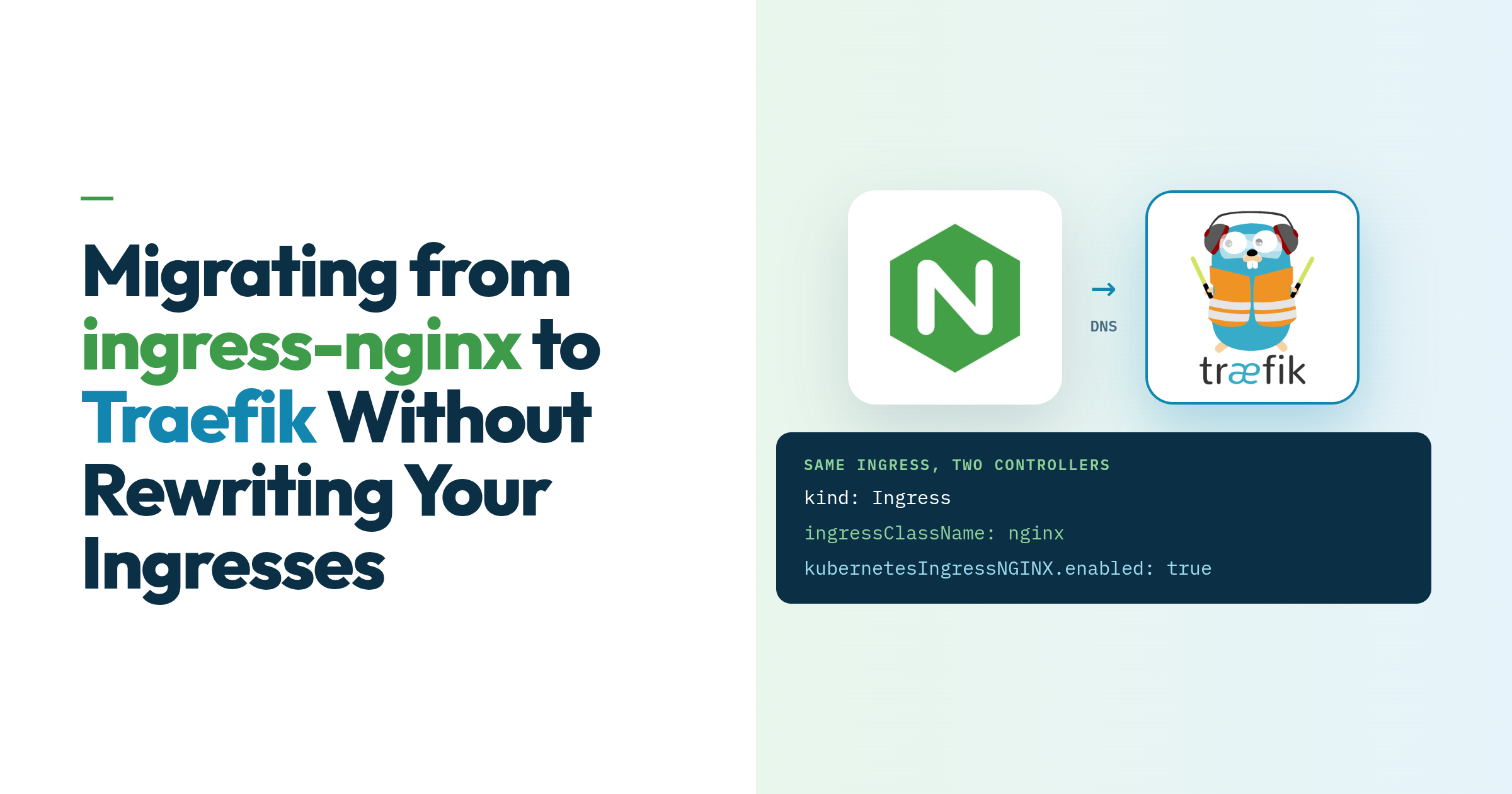
Migrating from ingress-nginx to Traefik Without Rewriting Your Ingresses

How to move a cluster off the retired ingress-nginx by running Traefik next to it on the same Ingress objects: what the Kubernetes Ingress NGINX provider translates and what it does not, the parallel run and DNS cutover step by step, the IngressClass you must not let Helm delete, and the things I would tell anyone operating Traefik for the first time.
October 2026

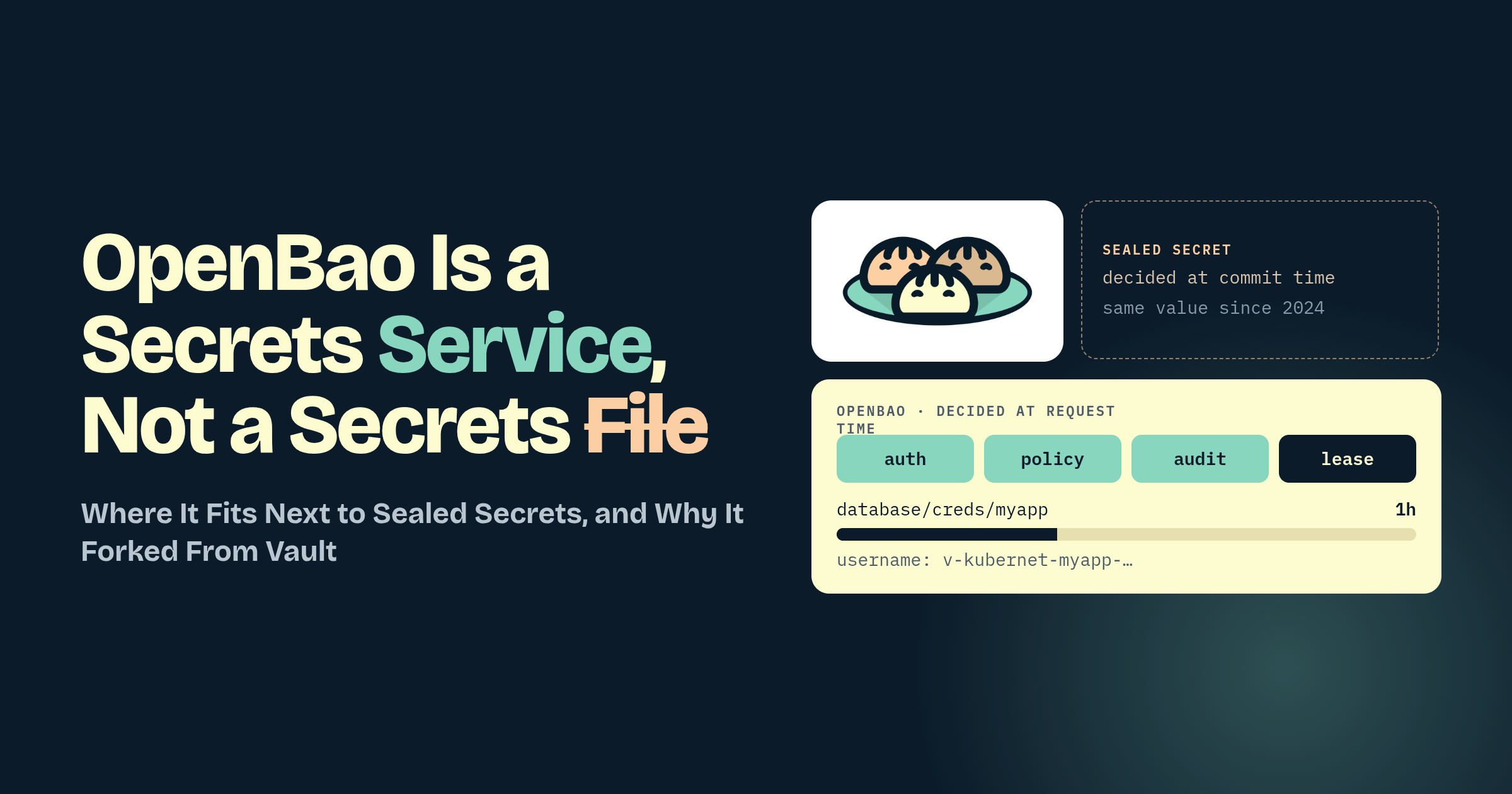
OpenBao Is a Secrets Service, Not a Secrets File: Where It Fits Next to Sealed Secrets, and Why It Forked From Vault

Why a secrets service is a different thing from an encrypted file in Git: OpenBao's seal, auth methods, policies, leases and audit, the three routes into a pod, what has changed since the Vault fork, and one Postgres password stored three ways.

November 2026

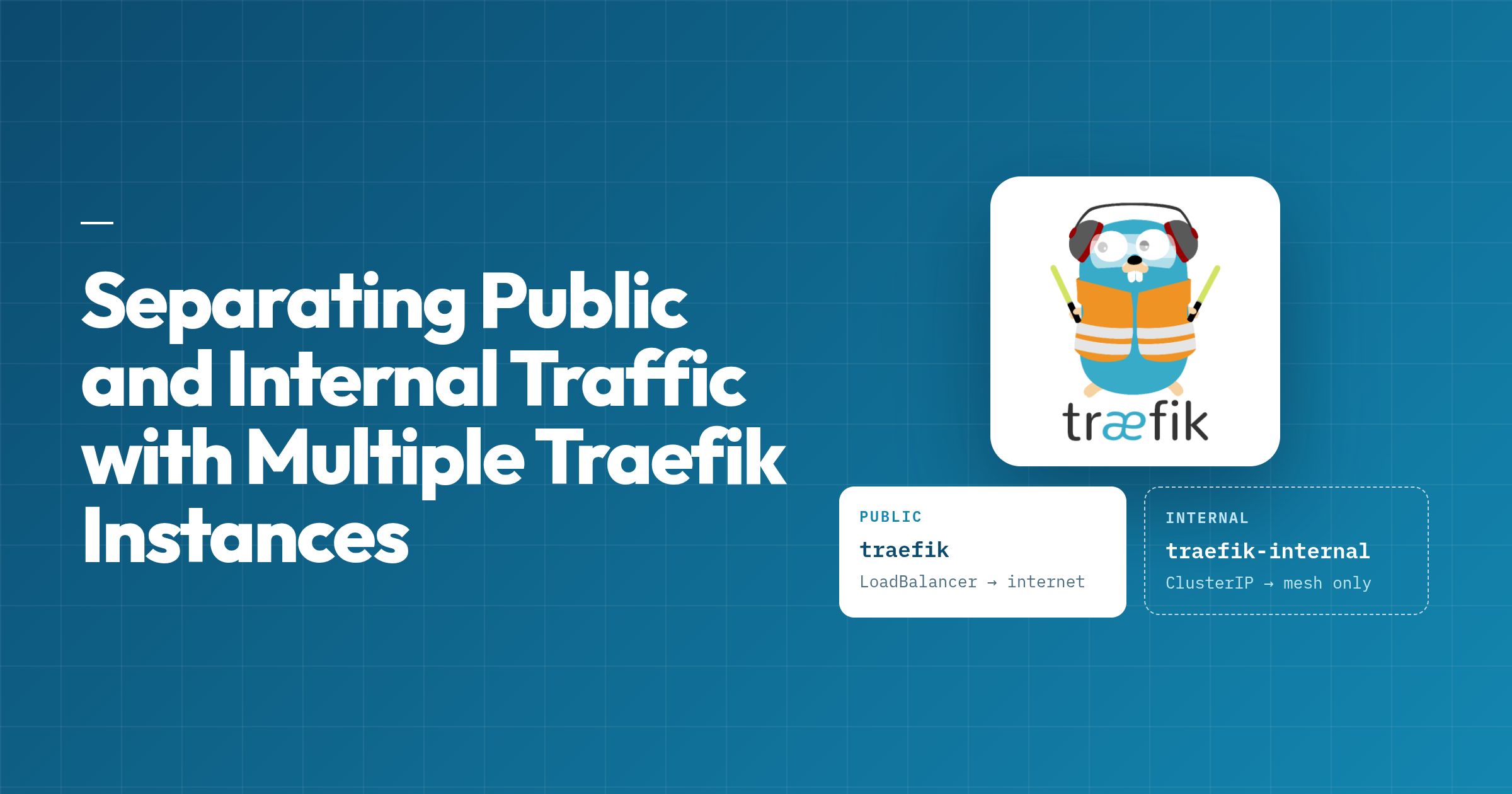
Separating Public and Internal Traffic with Multiple Traefik Instances

Why I run two Traefik instances per cluster instead of one Traefik with an auth middleware: how the IngressClass flag keeps them apart, the Helm values for each, how the internal one is reached over a mesh VPN, and the three-tier variant with an IP allow-list in the middle.

June 2026

Ten Things to Get Right Before You Run Loki in Production

Deployment mode, object storage, label cardinality, multi-tenancy and auth, cross-cluster shipping, and the failures that are silent rather than loud. Written after moving a Loki install twice and debugging an object store that corrupted everything it was given.

August 2026

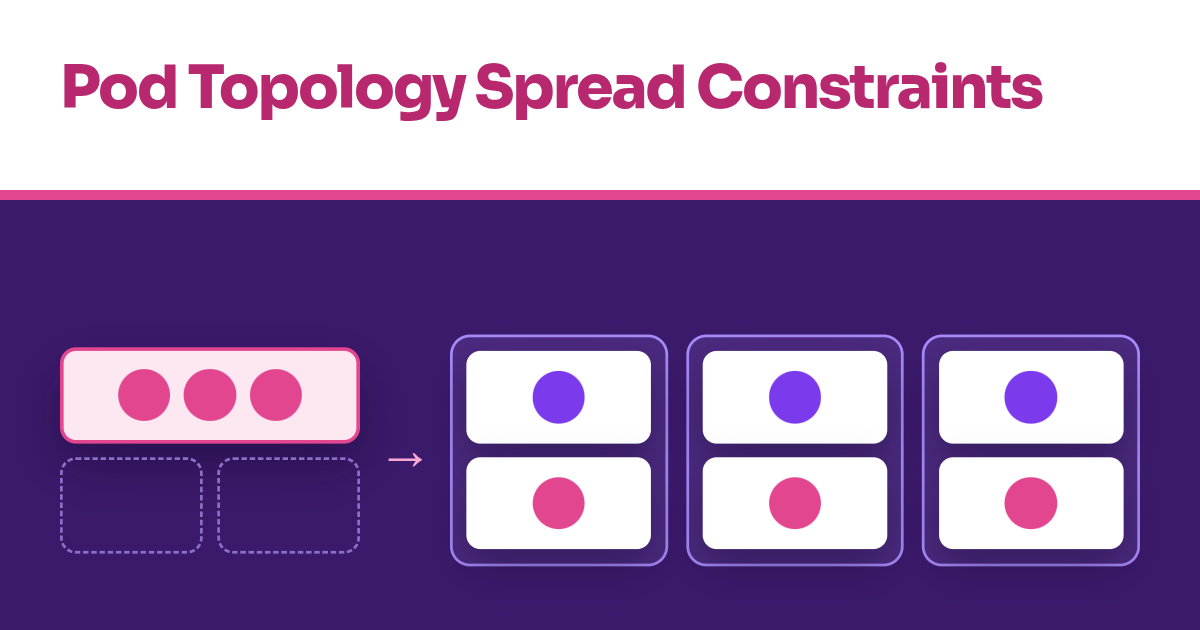
What's the Point of 3 Replicas If They're All on the Same Node? Enter Pod Topology Spread Constraints

A Deployment's replica count says nothing about where the replicas land, and three on one node is one failure from zero. Pod topology spread constraints give the count a shape: a topologyKey, the skew arithmetic the scheduler runs for every placement, a hard zone rule next to a soft hostname rule, matchLabelKeys so a rollout counts only its own ReplicaSet, and minDomains for zones that have no nodes yet. Plus the ways it quietly does nothing: a missing node label, no rebalancing after a drain or scale-down, and a zonal disk that pins the pod first.

November 2026

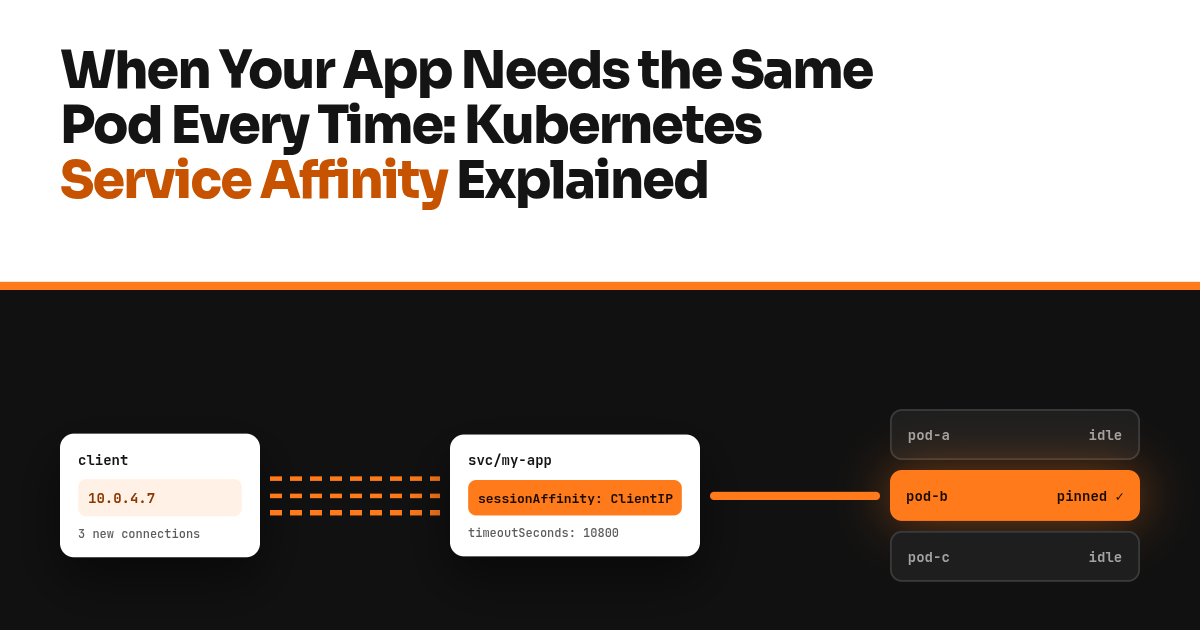
When Your App Needs the Same Pod Every Time: Kubernetes Service Affinity Explained

A Service picks a pod once per connection and forgets. sessionAffinity: ClientIP is the one knob that makes it remember, and it is narrower than the name suggests: it pins new connections only, by source address, in a per-node table with a sliding timeout. How kube-proxy builds it from the iptables recent match, IPVS persistence and nftables sets, why NAT and a non-sticky load balancer defeat it, why it does nothing behind Traefik, and what to use there instead.

November 2026

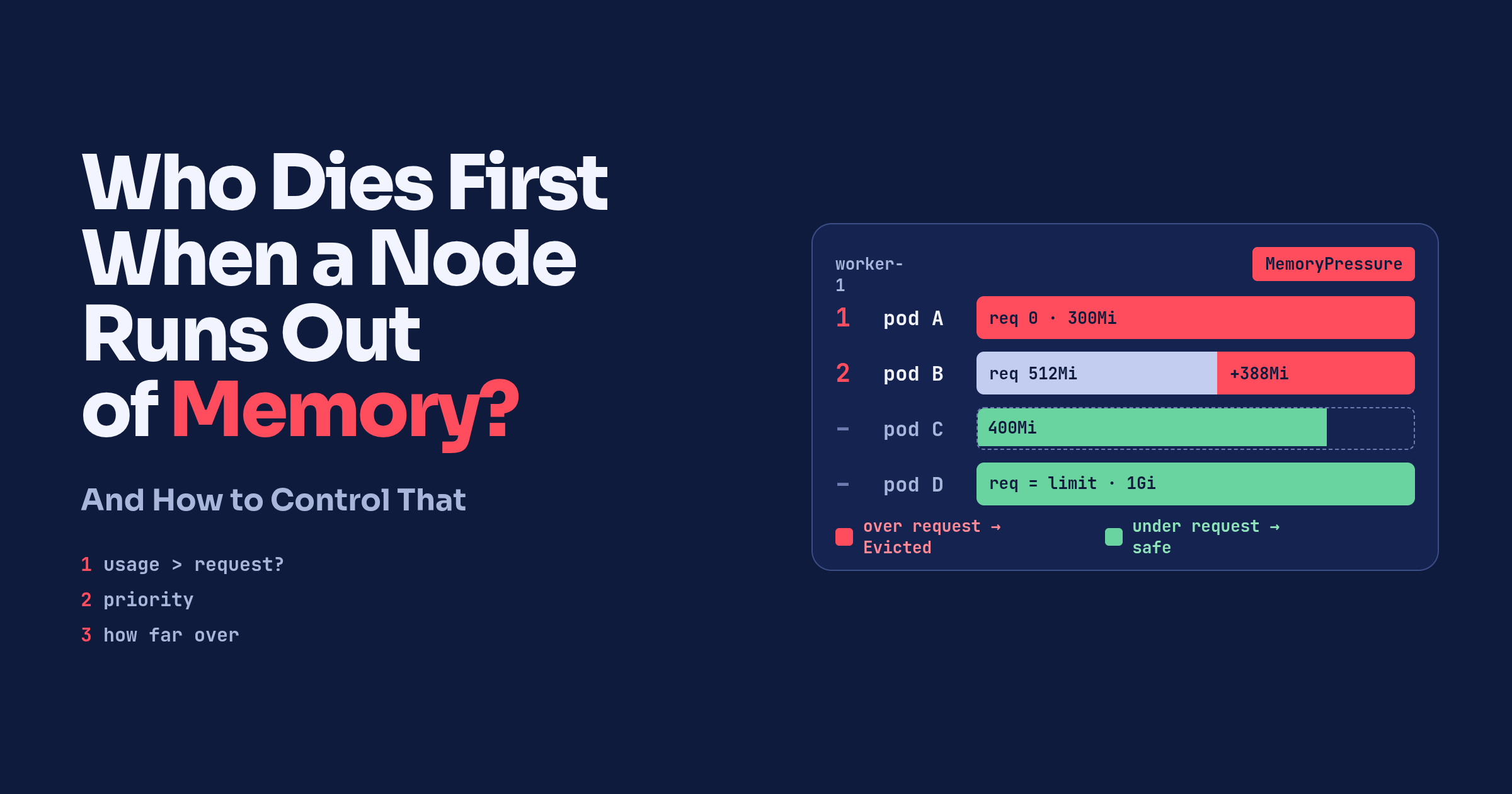
Who Dies First When a Kubernetes Node Runs Out of Memory? And How to Control That

The kubelet does not evict by QoS class. It sorts pods by usage over request, then priority, then how far over, and the only inputs you own are the pod's own requests and its priorityClassName. What requests and limits do, where QoS actually matters (the kernel OOM killer), what the eviction thresholds configure and what they cannot, and why Evicted and OOMKilled are two different programs killing for two different reasons.

November 2026

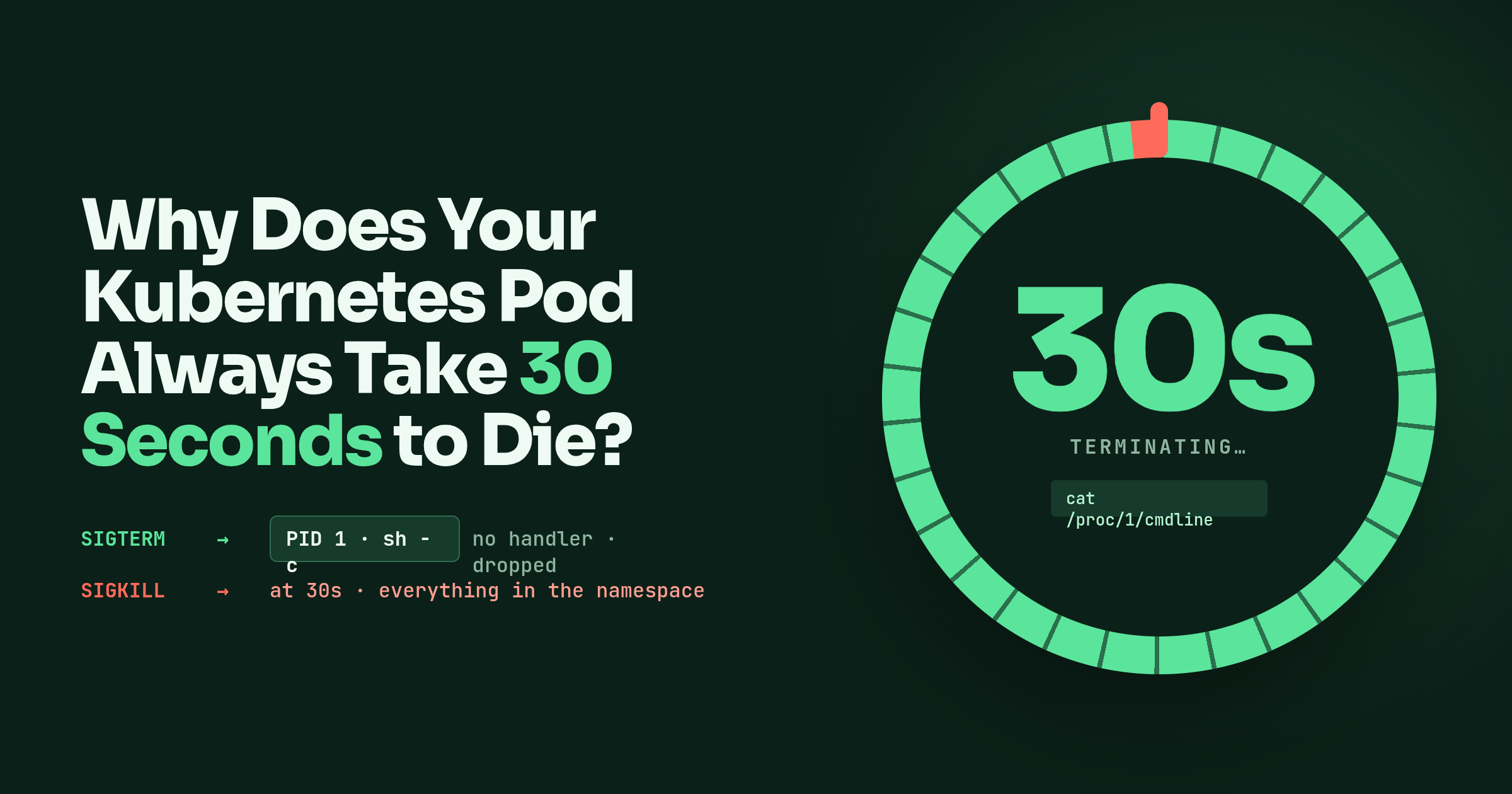
Why Does Your Kubernetes Pod Always Take 30 Seconds to Die?

A pod that takes exactly 30 seconds to terminate is a pod that never heard SIGTERM. Why the kernel refuses to deliver a default-action signal to PID 1, why a shell-form CMD puts sh in that seat and your app behind it, how to check what PID 1 actually is in a running container, and the three fixes: exec form, a real signal handler, or tini.

November 2026

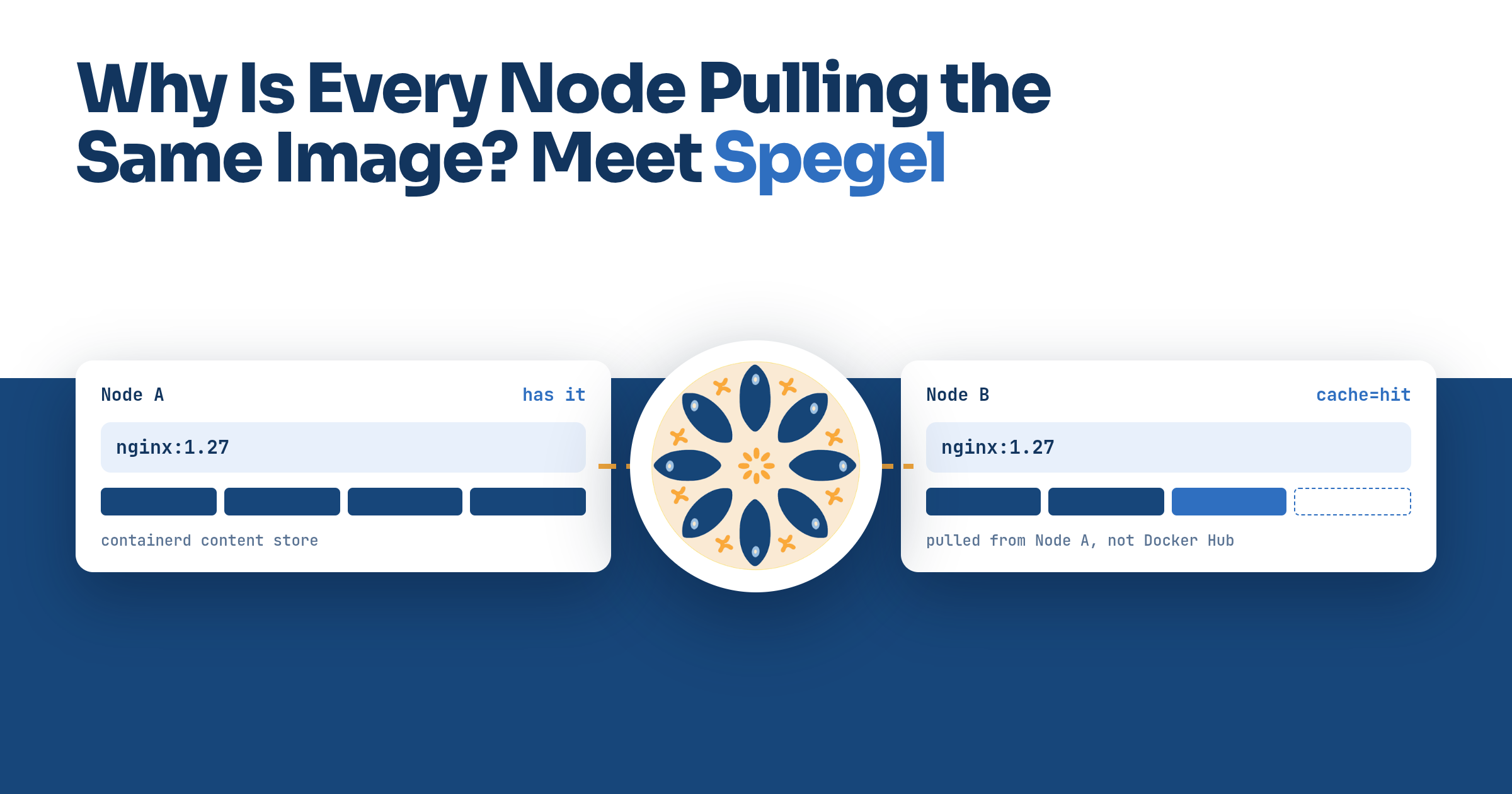
Why Is Every Node Pulling the Same Image? Meet Spegel

Node A has already pulled nginx, Node B has not, and a pod just landed on B. What Spegel does in that moment, and why it is safe when the answer is nothing: a DaemonSet that turns containerd's own content store into a cluster-wide mirror, finds peers through a Kademlia DHT, falls back to the real registry on a miss, and stores nothing of its own. Plus the containerd settings that make it work, the one that silently makes it do nothing, and a kind cluster to watch it on.

November 2026

Why Your DaemonSet Rolling Update Gets Stuck on hostPort Pods

A breakdown of why DaemonSets using hostPort can get stuck in Pending during rolling updates, and why the default maxSurge/maxUnavailable settings aren't always right for them.

July 2026